Bricks, Tokens and Compliance: A Builder's Field Guide to UK Property Fractionalisation on Aergo
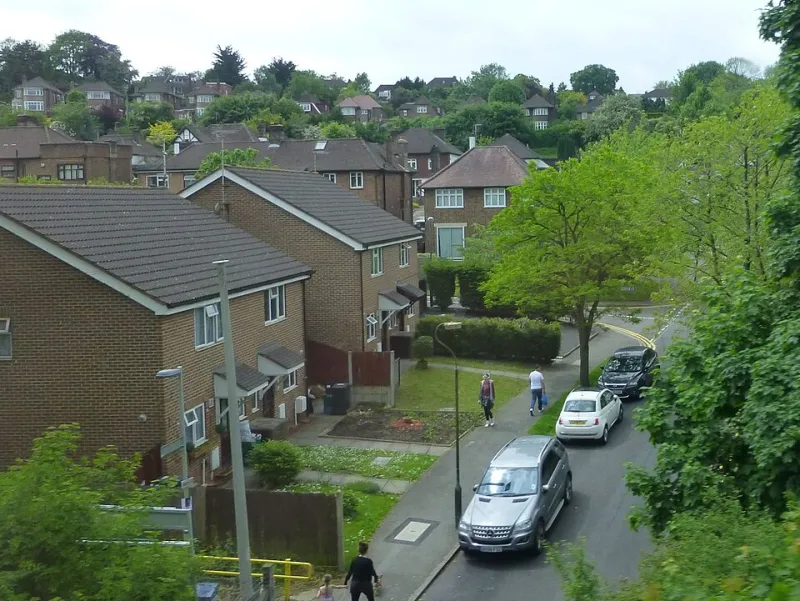
Photo: Russel Wills , CC BY-SA 2.0, via Wikimedia Commons
Tokenised UK property has a habit of arriving as a solution in search of a problem. The pitch is familiar: fractional ownership, lower entry points, secondary liquidity and a transparent cap table. For a UK property developer or fintech builder in 2026, the more useful question is narrower. What can a blockchain such as Aergo actually make better, and what remains legal, operational and distinctly human work?
Begin with the legal wrapper, not the token
A token is not a title deed. HM Land Registry records legal ownership of land and property in England and Wales; a token on Aergo cannot replace that register. Most UK fractional structures therefore place the property in a special purpose vehicle—typically a company or limited liability partnership—and give investors a tokenised economic interest in that vehicle. The legal interest, voting rights, distribution waterfall and exit rights sit in the SPV documents, not in the smart contract.
That distinction shapes everything. If the arrangement pools investor money and the returns depend on the manager’s efforts, it may be a collective investment scheme. If interests are offered to the public, financial promotion and prospectus questions arise. If tokens are transferable, the builder must decide whether they are transferable securities. These are not questions to resolve in a token standard. They require UK legal advice and, in many cases, FCA permissions.
UK regulatory touchpoints in 2026
The FCA’s cryptoasset regime, financial promotion rules and approach to security tokens all matter. So do the Money Laundering Regulations, which make customer due diligence a condition of doing business rather than a dashboard feature. HMRC treatment will depend on structure and investor profile; stamp duty land tax and capital gains analysis should be settled before a single token is minted. The ICO’s UK GDPR guidance applies to investor onboarding data, not just to the chain.
There is also the less glamorous matter of insolvency. If the SPV fails, what do token holders own? How are they treated relative to secured creditors? A smart contract can encode a distribution waterfall, but it cannot rewrite insolvency law. Builders who skip these questions tend to discover them at the worst possible moment.
Token design on Aergo
Aergo’s smart-contract environment supports fungible token contracts, often described in ARC-1 terms, but a bare token is only the beginning. A compliant property product needs permissioned transfers, investor allowlists, lock-up periods, jurisdiction rules, identity hooks and a clear process for forced transfers or redemptions. Those controls belong in the contract and in the administration layer around it.
Aergo’s hybrid architecture is useful here. Sensitive investor data can remain on a permissioned sidechain, while commitments and periodic state roots are anchored to the public Aergo network. That gives auditors and regulators a verifiable record without publishing personal data. The builder still needs a proper registry, key management and upgrade process. The chain provides evidence; it does not provide governance.
The operational gap between pilot and product
A pilot usually proves three things: tokens can be minted, a dashboard can display balances, and a distribution can be triggered. A product must prove much more. The cap table must reconcile with the SPV register. KYC must be refreshed. Transfers must be approved or blocked. Rent must be collected, reconciled and distributed. Valuations must be sourced and challenged. Tax reporting must be produced. Complaints must be handled. Custody and disaster recovery must be tested.
This is where many tokenisation projects lose momentum. The blockchain layer is often the simplest part. The administration console, the legal operations and the reconciliation between on-chain balances and off-chain registers are the real product. Builders should budget accordingly.
What blockchain can and cannot solve
Aergo can provide a transparent audit trail, automated distribution logic, restricted transfers and a shared record between parties who do not fully trust one another. It cannot verify that a building exists, guarantee liquidity, remove counterparty risk or replace a solicitor’s title investigation. It cannot make an illiquid asset liquid by decree. It can, however, make the ownership record more auditable and the distribution process less manual.
A pragmatic build sequence
Start with the legal wrapper and regulatory permissions. Then design the off-chain register and data model. Only then write the token contract, with compliance hooks treated as first-class requirements. Run the pilot on a permissioned Aergo sidechain with a small, sophisticated investor group. Anchor to the public network, commission an independent review, and test the wind-down before scaling.
Tokenised UK property is not hype-proof. It is a legal and operational product with a blockchain component. Builders who treat Aergo as infrastructure—not as a regulatory shield—will have the more credible route from pilot to product.